Customer Master
The Customer is who you sell to — usually the ship owner or manager. Each record holds the customer's addresses, contacts, credit terms and default billing and shipping details, and those flow onto every sales document you raise for them.
Where to find it: the Customer screen in the menu.
What it is
A customer record is the account you bill and ship to. It keeps the company details in one place — who they are, their addresses (called sites), their people (contacts), and how much credit you allow them — so that every quote, order, delivery and invoice fills in the right details automatically.
The list
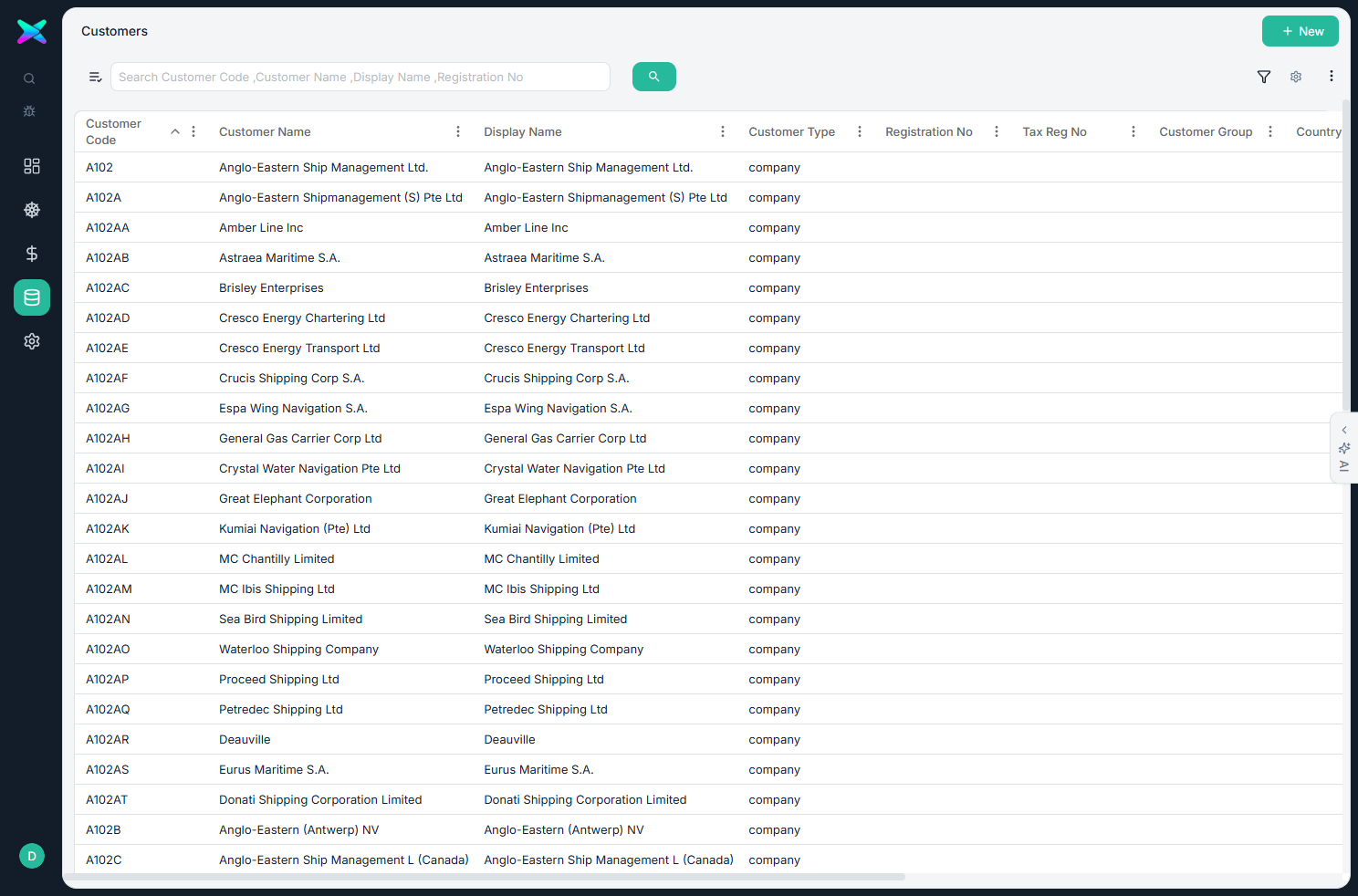
The Customer list shows every account. Each row carries a status badge, and a red Blacklisted badge appears for customers flagged on the watchlist. Search or filter to find an account, click a row to open it, or use + New to add one.
The form
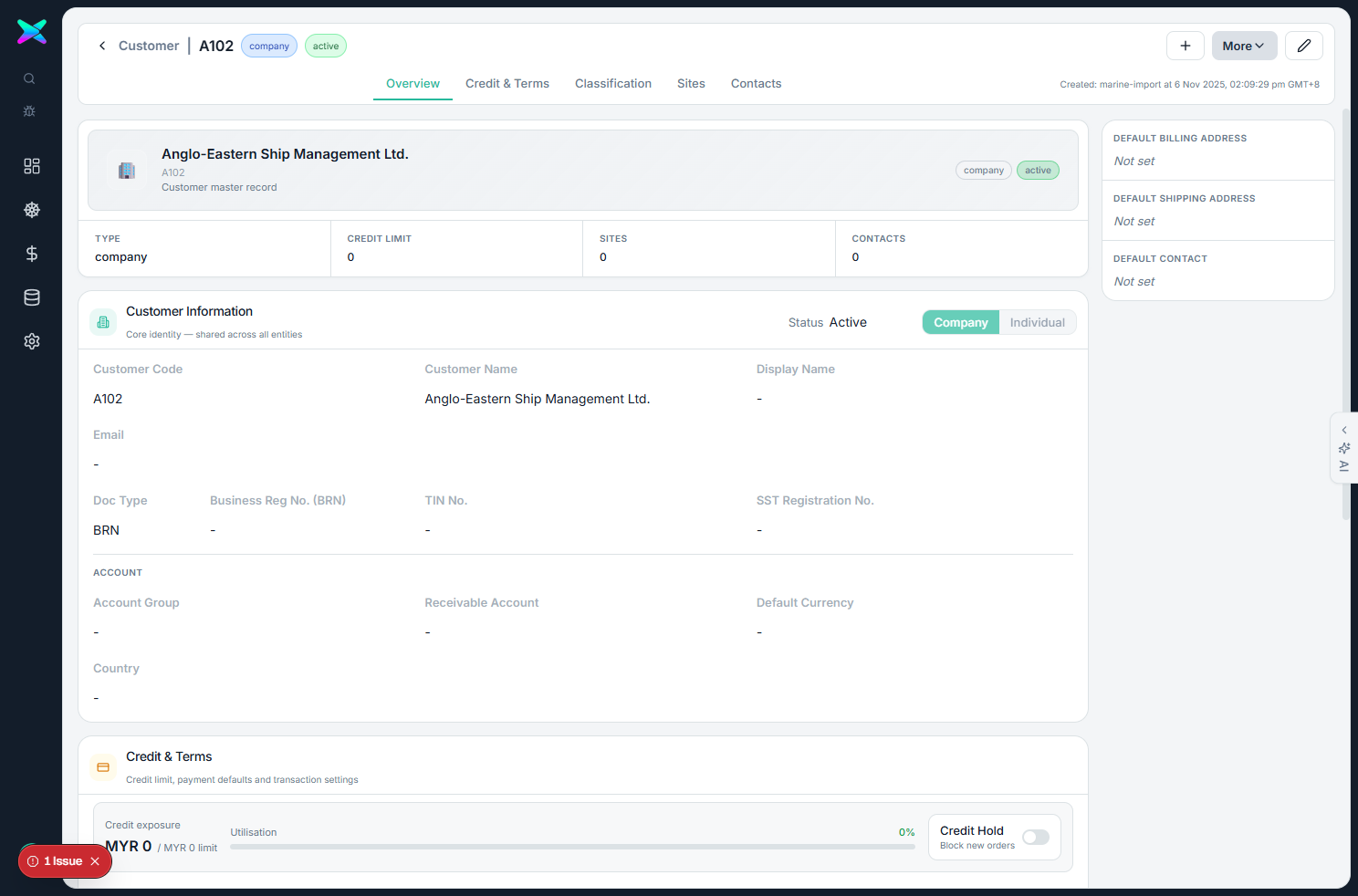
The form is organised into tabbed sections:
| Section | What you fill in |
|---|---|
| Customer Information | Code, name, display name, email, document type, registration numbers, account group, default currency and country. A Company / Individual toggle. |
| Credit & Terms | Credit limit with a usage bar, a Credit Hold toggle (blocks new orders and asks for a reason), and payment defaults. |
| Classification & Assignment | Group, tags, segment, and a watchlist flag (normal / high risk / blacklisted) that shows a red badge on the list. |
| Sites | The address book — billing, shipping, both, or returns. Each site can be marked as the default billing or default shipping address. |
| Contacts | The people at this customer, with one marked as the default contact. |
What you can do
- Set default addresses. Mark one billing and one shipping site as the default, and they pre-fill on every sales document — quote, order, delivery note and invoice — and are frozen onto each one so later address changes don't rewrite old paperwork.
- Control credit. Put a customer on hold to stop new orders (a reason is required), and watch the usage bar to see how much of their limit is used.
- Keep sites and contacts as full lists, each with its own default.
- Store an email that's used as the default recipient when you send them documents.
How to use
- Click + New and enter the code, name and registration details.
- Add one or more Sites and mark the default billing and shipping.
- Add Contacts, set the credit limit and terms if you use them, then Save.
⬆ Where it comes from
- You set customers up yourself. They can also be created automatically when a quote or import needs a customer that doesn't exist yet.
What you can print
Nothing is printed from this screen. The customer's billing address appears on the documents you raise for them, but the master record itself has no printout.